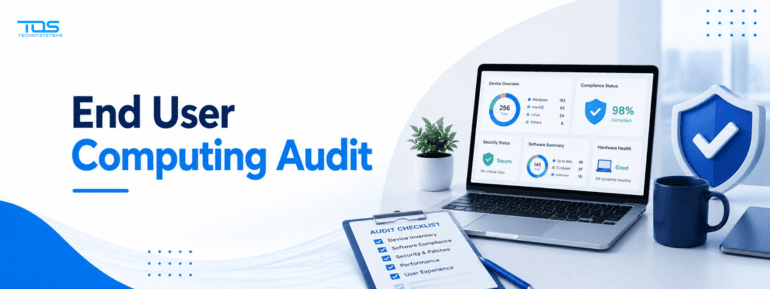
Microsummary: End User Computing Audits help organisations strengthen security, meet compliance requirements and reduce unnecessary IT costs. They also improve the employee experience by identifying issues across devices, applications and user access.
Key Insights
- Endpoint devices can introduce security and compliance risks when left unchecked.
- Reviewing devices and user access helps organisations identify gaps before they escalate.
- Accurate asset records support stronger compliance and risk management.
- Unused licences and ageing hardware can increase IT spending without adding value.
- Hybrid work requires consistent control over devices and access permissions.
- Independent assessments bring a fresh perspective to longstanding challenges.
- Clear findings help leaders make informed technology and investment decisions.
- Better control of end-user technology supports a more secure and resilient workplace.
An End User Computing Assessment highlights a reality many organisations overlook. Their greatest exposure is not the data centre. It's the laptop bag. Endpoints have quietly become the front line of enterprise risk. Every unmanaged device, every unpatched application, and every forgotten login is a liability sitting in plain sight.
Over fifteen years advising CIOs, compliance leaders, and boards across Australia, I have seen the same story repeat itself. Organisations invest heavily in network security, then overlook the technology their own people use every day.
An End User Computing Audit closes that gap. It replaces assumption with evidence and exposure with control. For enterprises facing regulatory and commercial pressures, this level of oversight is no longer optional. It is essential.
What an End User Computing Audit Really Delivers
An End User Computing Assessment provides a clear view of the devices, applications and access points your workforce relies on every day. This includes laptops, desktops, tablets and mobile devices. It also covers remote access tools, cloud applications and user permissions. Nothing is assumed. Every asset, configuration and access pathway is reviewed and validated.
This is not a standard IT Infrastructure Audit. Infrastructure audits focus on servers, networks and core systems. An End User Computing Audit focuses on the technology employees use every day. It examines how people access data, use applications and interact with workplace systems.
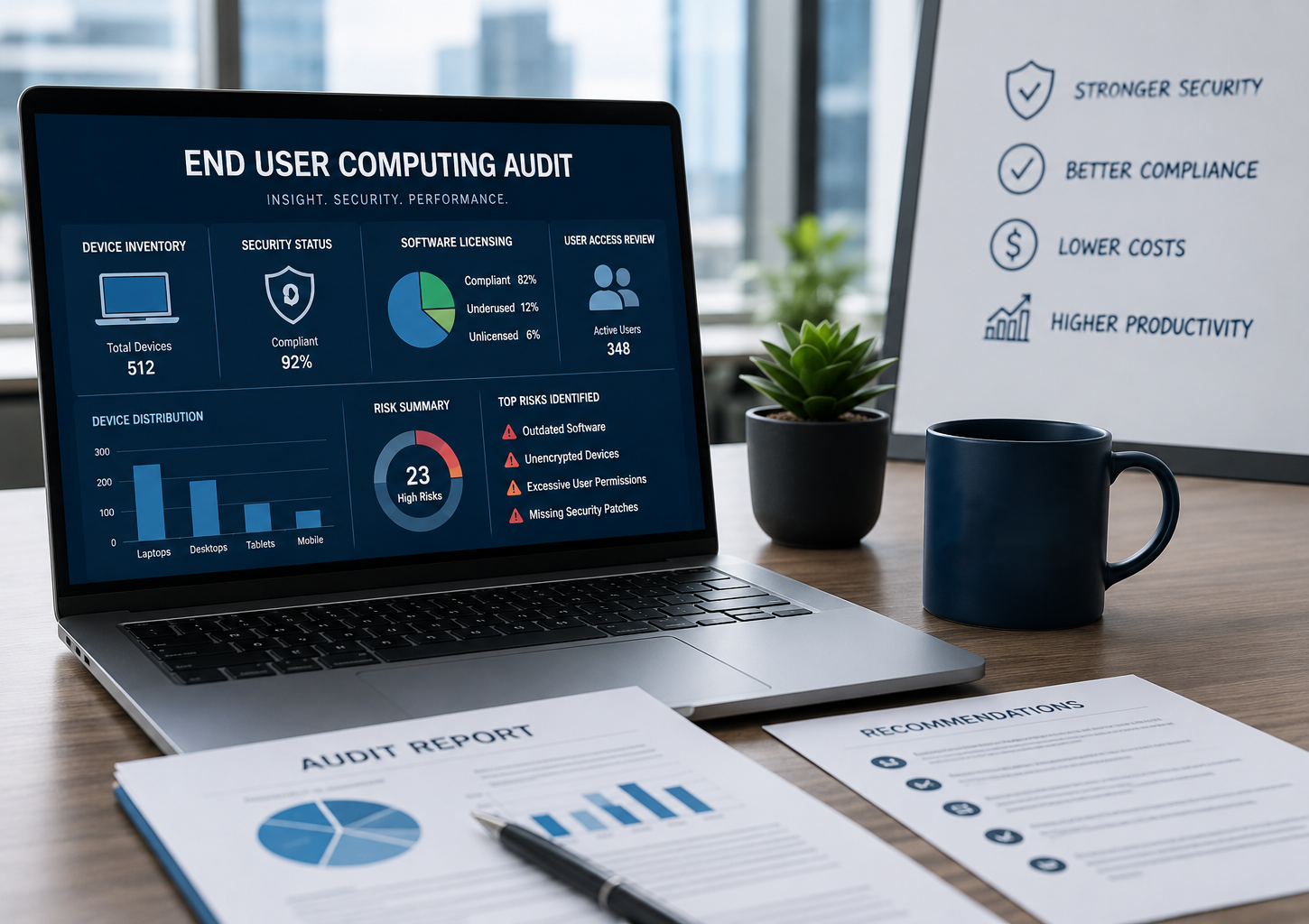
The value goes far beyond a list of findings. The assessment helps organisations-
- Strengthen security controls
- Support compliance requirements
- Reduce unnecessary technology costs
- Improve workforce productivity
The result is a clearer understanding of risk, better decision-making and a more effective modern workplace.
Why Sophisticated Organisations Commission This Assessment
Boards do not commission audits out of curiosity. They do it because the cost of uncertainty has become too great.
I recently worked with a healthcare provider that uncovered 40 unmanaged laptops during a routine review. None were encrypted. None appeared on the asset register. A significant privacy and compliance risk had gone unnoticed for months, creating potential exposure under Australian data protection requirements.
The audit did more than identify the issue. It provided a clear remediation roadmap, enabling leadership to address the risk quickly and with confidence. Financial services organisations use End User Computing Audits to strengthen their position ahead of APRA reviews. Education providers use them to support governance and funding requirements. Government agencies incorporate them into established risk and compliance frameworks.
The reason is straightforward. When security, compliance and operational performance are on the line, leadership cannot afford to make decisions based on assumptions. An End User Computing Inspection provides the visibility needed to make informed, accountable decisions.
The Hidden Risks Sitting Inside Your Endpoint Fleet
Unmanaged devices multiply faster than most executives realise. Staff bring personal laptops. Contractors connect unmanaged mobile devices. Former employees' credentials remain active long after they leave.
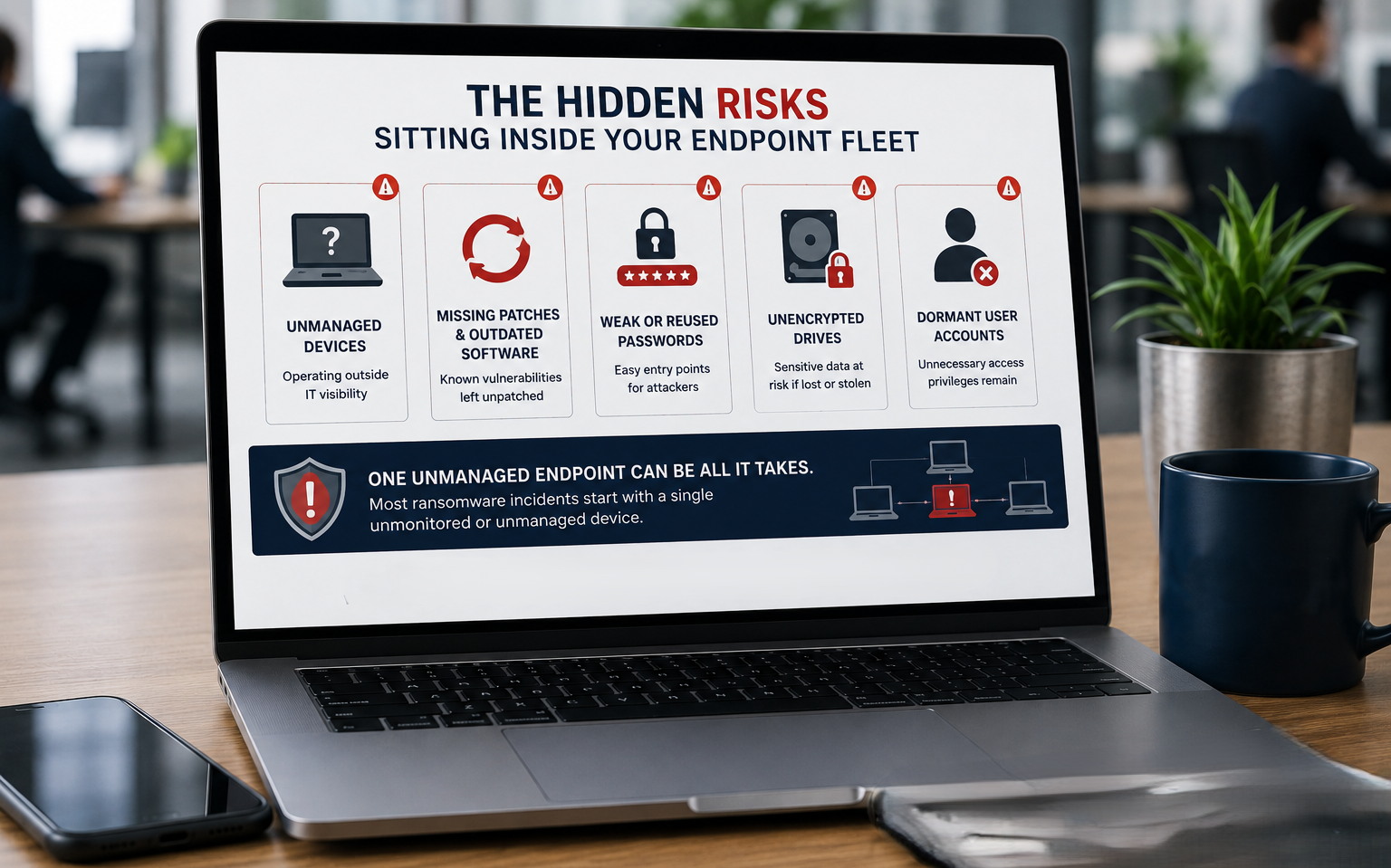
Common risks include-
- Unmanaged devices operating outside IT visibility
- Missing security patches and outdated software
- Weak or reused passwords across business applications
- Unencrypted drives containing sensitive information
- Dormant user accounts with unnecessary access privileges
Each of these creates an opening for attackers. Missing patches, weak passwords and unencrypted drives can quickly turn ordinary devices into security liabilities. It only takes one. Most ransomware incidents I have investigated can be traced back to a single unmanaged or unmonitored endpoint, not a sophisticated compromise of core infrastructure.
An Endpoint Management Audit brings these blind spots into focus before an attacker finds them first. Just as importantly, it confirms whether your existing security investments are protecting every device across the environment, or only the assets IT already knows about.
Turning Compliance from a Liability into a Competitive Advantage
Australian enterprises operate within an increasingly demanding compliance landscape. The Privacy Act, ISO 27001 and industry-specific regulatory frameworks leave little room for uncertainty. Yet many compliance teams still rely on outdated spreadsheets and incomplete asset registers. Shadow IT regularly remains invisible until it becomes a security, compliance or governance issue.
An IT Compliance Audit replaces uncertainty with verifiable evidence, giving organisations the documentation and visibility regulators, auditors and stakeholders expect.
|
To learn more about maintaining continuous compliance and reducing audit fatigue, read our guide to IT Compliance Auditor Services. |
The impact extends well beyond passing an audit. Strong governance can improve cyber insurance outcomes, strengthen client confidence and support eligibility for high-value contracts and tenders. Compliance is no longer just a checklist exercise. When managed effectively, it becomes a genuine business advantage.
The Cost Case: Where Budget Is Quietly Leaking
Endpoint sprawl remains one of the least scrutinised cost centres in enterprise IT. Software licences accumulate over time. Cloud subscriptions continue long after they are needed. Devices stay in circulation beyond their useful life.
During one Enterprise IT Audit, our consultants uncovered 15% in redundant Microsoft 365 licensing. The savings were identified quickly and reallocated to higher-value initiatives within the same quarter. Ageing hardware creates another hidden drain. Increased support requests, declining performance and unplanned downtime all add cost long before the pattern becomes visible.
The most common cost leaks include-
- Duplicate or unused software licences
- Ageing hardware generating excessive support costs
- Oversized and underutilised cloud storage allocations
- Inactive user accounts retaining paid subscriptions
- Reactive, uncoordinated device procurement practices
A well-executed Technology Risk Assessment does more than identify inefficiencies. It provides a clear path to optimisation. In many cases, the savings uncovered during the assessment offset the cost of the audit within the first year.
The Productivity Dividend Executives Overlook
Slow logins. Outdated software. Inconsistent device configurations. On their own, these issues may seem insignificant. Together, they create friction that affects productivity across the entire organisation.
An End User Computing Audit identifies where that friction exists and why it persists. Standardised device builds, optimised access controls and consistent configurations help reduce support ticket volumes while improving the employee experience. Hybrid workforces benefit immediately. Employees can move between home and office environments with fewer technical disruptions, allowing them to stay focused on the work that matters.
The impact goes beyond operational efficiency. As recurring issues decline, IT teams spend less time troubleshooting and more time supporting strategic initiatives. That shift enables technology teams to contribute greater business value while helping organisations retain skilled technical talent in a highly competitive market.