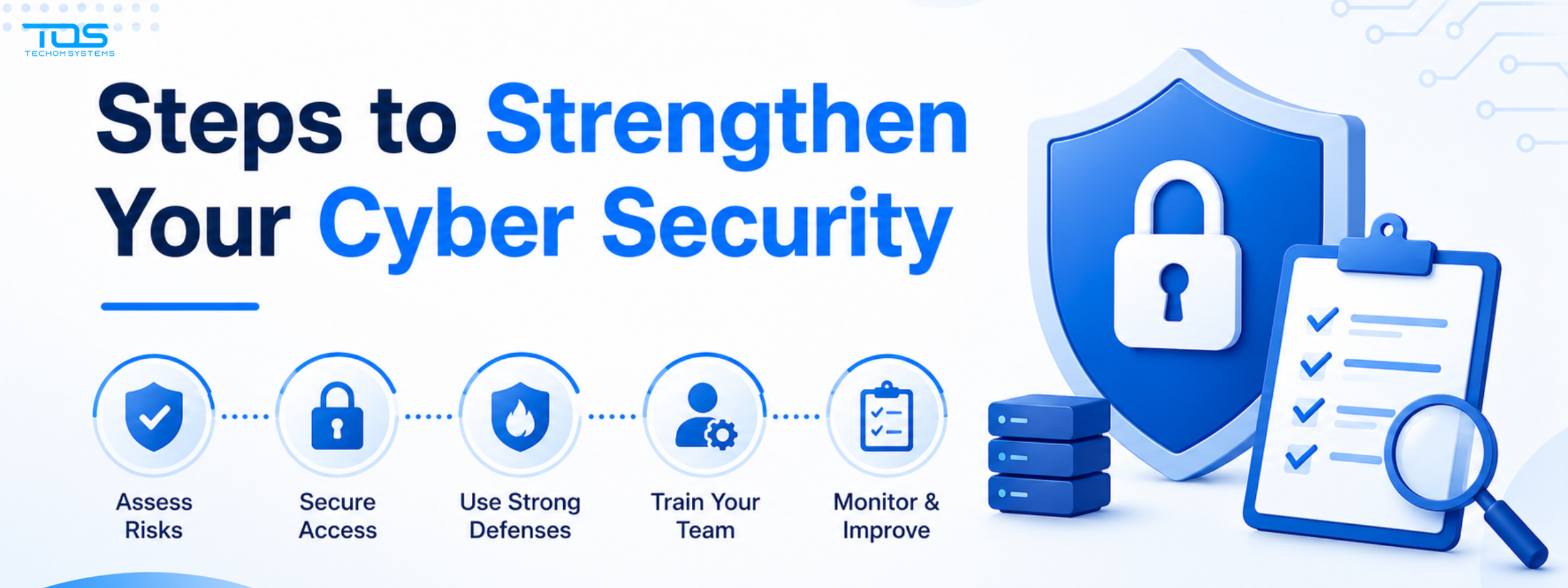
A cyber security assessment helps organizations identify vulnerabilities before attackers can exploit them.
Understanding and prioritizing critical assets is the first step toward building a stronger security strategy.
Weak passwords, outdated software, unpatched systems, and phishing attacks remain some of the most common security risks.
Regular reviews of user access permissions help reduce the risk of unauthorized access and data exposure.
Tested backups and recovery plans are essential for minimizing downtime during cyber incidents.
Employee awareness and cybersecurity training play a crucial role in preventing successful attacks.
Cybersecurity is an ongoing process that requires continuous monitoring, assessment, and improvement.
As businesses continue to embrace digital transformation, cybercriminals are finding new ways to exploit security gaps. A single successful attack can disrupt operations, expose sensitive data, and result in significant financial and reputational damage. While many organizations invest in security solutions, hidden vulnerabilities can still exist within their networks, systems, and processes. These weaknesses often go unnoticed until a cyber incident occurs.
Proactive security planning is essential for organisations of all sizes. By identifying vulnerabilities, evaluating existing security measures, and understanding potential threats, businesses can strengthen their defenses and reduce the risk of cyber incidents. A thorough security review not only helps safeguard critical data and systems but also ensures that your organization is better prepared to respond, recover, and maintain business continuity when unexpected security events occur.
In this article, we'll explore five critical steps that form the foundation of an effective cyber security assessment and help businesses identify risks, strengthen security, and improve protection against evolving cyber threats.
Here Are 5 Key Steps to Strengthen Your Cyber Security
Protect your organization from evolving cyber threats by following five essential assessment steps. Identify critical assets, uncover vulnerabilities, review access controls, strengthen defenses, and reduce risks to improve overall security resilience.
1. Define Your Security Priorities
The foundation of any effective cyber security assessment is understanding your most valuable digital assets. Before implementing security controls, you need complete visibility into what matters most to your organization. These assets may include:
Customer data
Financial records
Employee information
Business-critical applications
Cloud environments
Email and communication systems
Without a clear inventory of assets, security teams can overlook critical areas that require protection. By identifying and prioritizing sensitive information, businesses can focus their resources where they are needed most and reduce the risk of costly incidents.
2. Find Your Weak Spots
A successful cyber security assessment goes beyond asset identification and focuses on uncovering vulnerabilities that attackers could exploit. Cybercriminals often target common weaknesses such as:
Weak passwords
Outdated software
Unpatched systems
Misconfigured settings
Phishing-prone employees
Even a small security gap can provide an entry point into your network. Regular vulnerability reviews help organizations discover risks before attackers do, enabling proactive remediation and reducing the likelihood of a breach.
3. Review User Access Permissions
User access management is often overlooked during a cyber security assessment, yet it plays a critical role in protecting sensitive information. Over time, employees may accumulate access rights they no longer require due to role changes, department transfers, or ineffective offboarding processes. Excessive permissions can increase the risk of unauthorized access, data exposure, accidental errors, and insider threats.
To reduce these risks, organizations should follow the principle of least privilege, ensuring that users only have access to the systems and data necessary for their job responsibilities. Regularly reviewing and updating user permissions helps protect sensitive information, minimize unauthorized access, maintain compliance with regulatory requirements, and strengthen overall security.
4. Test Your Recovery Readiness
A comprehensive cyber security assessment should evaluate not only prevention measures but also recovery capabilities. Imagine your business is hit by a ransomware attack tomorrow. How quickly could operations resume?
Many organizations maintain backups but fail to test them regularly. Unfortunately, a backup is only valuable if it can be restored successfully when needed.
Recovery planning should include:
A well-defined recovery strategy helps organizations prepare for cyber incidents, minimize disruption, and restore critical systems and data as quickly as possible.
Regular backup verification
Disaster recovery testing
Incident response planning
Business continuity procedures
Testing recovery processes helps ensure your organization can continue operating with minimal downtime and financial impact, even during a major security event.
Recovery Essentials:
These core recovery capabilities ensure your organization can quickly recover from unexpected disruptions and maintain business operations during and after a security incident.
Secure Backups
Recovery Testing
Business Continuity Planning
5. Strengthen Employee Awareness
People remain one of the most important factors in organizational security. As part of a cyber security assessment, businesses should evaluate employee awareness and training programs. Many cyber attacks still rely on human error. Employees may unintentionally:
Click malicious links
Open infected attachments
Share sensitive information
Fall victim to social engineering tactics
Ongoing security awareness training helps employees recognize threats and respond appropriately. When staff understand cyber risks, they become an active part of your defense strategy rather than a potential vulnerability.
Focus Areas for Training:
Equipping employees with the knowledge and skills to recognize cyber threats is essential for reducing human error and strengthening your organization’s overall security.
Security Awareness
Phishing Identification
Password Security
Safe Data Handling
Planning a Cyber Security Assessment? Watch this video to learn the five key steps to identify security gaps, reduce cyber risks, strengthen business resilience, and improve your organization's overall security.
Why Are Ongoing Cyber Security Assessments Essential?
A cyber security assessment should never be treated as a one-time activity. As cyber threats continue to evolve, organizations must regularly review and update their security measures to stay protected. Here are the key benefits of a cyber security assessment:
Identify Emerging Risks: Detect new vulnerabilities, threats, and attack vectors before they can be exploited.
Strengthen Security Controls: Evaluate the effectiveness of existing security measures and address any gaps.
Maintain Regulatory Compliance: Ensure adherence to industry standards, data protection regulations, and security requirements.
Protect Sensitive Data: Safeguard customer information, financial records, and other critical business assets from unauthorized access.
Improve Business Resilience: Enhance the organization's ability to prevent, respond to, and recover from cyber incidents.
Support Ongoing Risk Management: Continuously monitor and reduce security risks as business environments and technologies change.
Organizations that regularly assess and improve their security measures are better equipped to reduce cyber risks, prevent costly breaches, and recover quickly from security incidents.
Why Choose TECHOM Systems for Your Cyber Security Assessment?
At TECHOM Systems, we help organizations identify vulnerabilities, reduce cyber risks, and strengthen their overall security through practical, business focused cybersecurity services. Our proactive approach goes beyond identifying existing security gaps we help businesses stay ahead of evolving threats with comprehensive assessments covering networks, endpoints, cloud environments, user access controls, and security policies. Our experienced cybersecurity professionals provide clear insights and tailored recommendations that align with your organization's unique needs and risk profile.
We believe cybersecurity is not just about protection but also about ensuring business continuity and long-term resilience. To support this goal, we deliver actionable, prioritized recommendations that are easy to implement and designed to minimize operational disruption. From employee security awareness programs to customized security strategies for businesses of all sizes, TECHOM Systems helps organizations continuously assess risks, strengthen defenses, and stay prepared for an ever-evolving threat landscape. Connect with TECHOM Systems to build a stronger, more resilient cybersecurity strategy.
Frequently Asked Questions (FAQs)
1. What is a cyber security assessment?
A cyber security assessment is a detailed evaluation of an organization's security controls, systems, and processes to identify vulnerabilities, assess potential risks, and improve overall protection against cyber threats.
2. Why is cybersecurity important for businesses?
Cybersecurity helps protect sensitive data, business operations, customer information, and company reputation from threats such as ransomware, phishing attacks, and data breaches.
3. How often should security reviews be conducted?
Businesses should review their cybersecurity measures regularly ideally at least once a year or whenever significant changes are made to their IT infrastructure, applications, or cloud environment to ensure ongoing protection against emerging threats.
4. What are the most common security vulnerabilities in organizations?
Some of the most common vulnerabilities include weak passwords, outdated software, unpatched systems, excessive user permissions, and lack of employee awareness about phishing and social engineering attacks.
5. How can TECHOM Systems help improve security?
TECHOM Systems provides expert cyber security assessment services to identify risks, strengthen security controls, improve recovery readiness, and help organizations build a resilient cybersecurity strategy.
Final Thoughts
A well-executed cyber security assessment provides the visibility and insights needed to protect your organization from modern cyber threats. By understanding what needs protection, identifying vulnerabilities, managing access, testing recovery plans, and educating employees, businesses can significantly reduce risk and strengthen their security.
At TECHOM Systems, we believe that better cybersecurity starts with better awareness. Taking these five critical steps today can help your organization stay secure, resilient, and prepared for tomorrow’s challenges.
Ready to Strengthen Your Cyber Security?
Hidden security risks can leave your business exposed. TECHOM Systems provides a free initial cybersecurity assessment to help identify vulnerabilities and deliver practical recommendations to improve your security.
Keep Reading
Explore our latest technological insights tailored for Australian businesses.