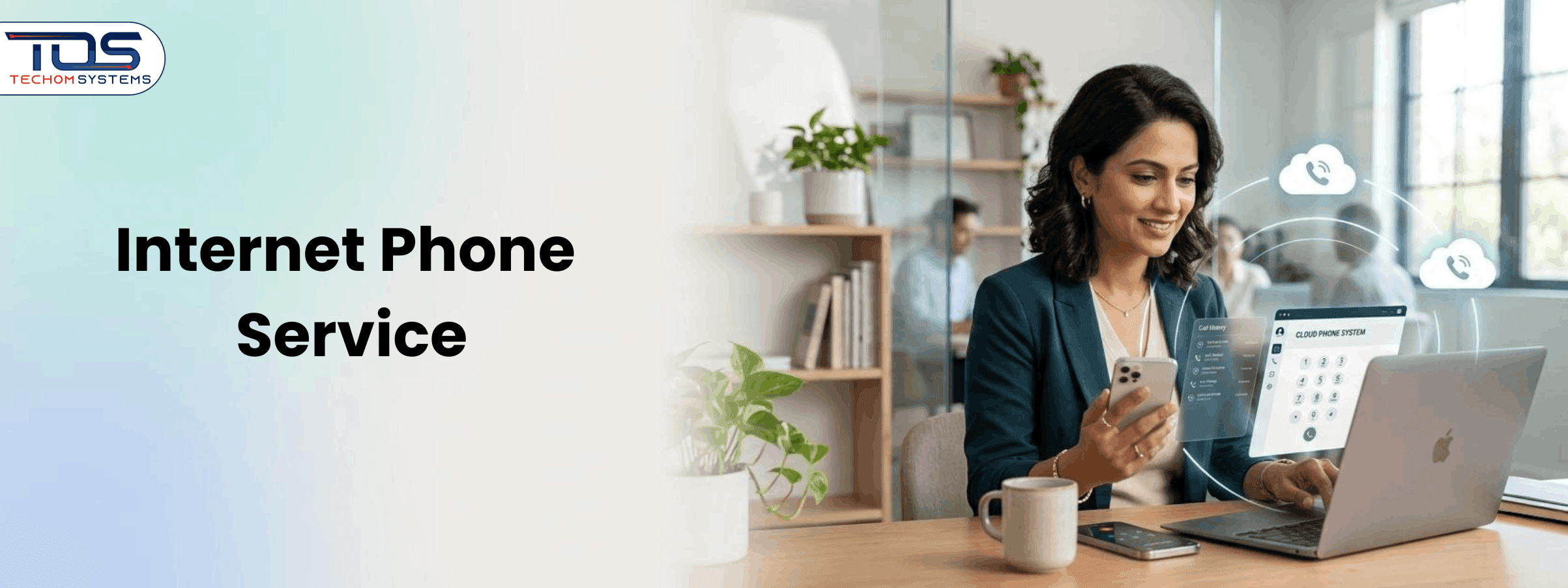
Micro Summary: An internet phone service for business provides a scalable and cost‑efficient communication foundation that supports long‑term operational goals. By replacing hardware‑dependent systems with cloud‑based VoIP, organisations gain centralized control, improved reliability and the flexibility to adapt as communication demands evolve ensuring the phone infrastructure strengthens performance rather than limiting growth.
Key Insights
- Strategic Communication Shift: An internet phone service for business enables organisations to move away from rigid, hardware‑dependent phone systems and adopt flexible, cloud‑based communication aligned with modern operational models.
- Scalability by Design: VoIP platforms support rapid growth by allowing users, extensions and call capacity to scale without infrastructure changes, ensuring communication systems keep pace with business expansion.
- Centralised Control: Cloud‑based phone systems provide unified visibility into call routing, usage and performance, simplifying oversight and enabling faster operational adjustments when requirements change.
- Virtual Enablement: A virtual phone system ensures consistent communication across locations and devices, supporting remote teams and multi‑site operations without compromising reliability or professionalism.
- Operational Efficiency: Reliable multi line phone systems for small business reduce missed calls, improve call handling during peak volumes and contribute to better customer and internal communication outcomes.
Modern business environments demand communication systems that are agile, scalable and built for change. Traditional phone systems, fixed lines and hardware‑heavy setups are no longer aligned with how modern businesses operate, scale, or engage with customers. As teams become more distributed and customer interactions grow more time‑sensitive, organisations are increasingly adopting an internet phone service for business that can support both current needs and future growth.
TECHOM Systems offers a business phone solution designed to replace rigid, legacy infrastructure with a more flexible and reliable communication framework. Built on VoIP technology, the platform enables businesses to manage calls, users and locations through a centralized system without the limitations of physical phone lines or complex hardware dependencies.
Growing Adoption of Internet Phone Services by Australian Businesses
Australian businesses are increasingly reassessing their communication infrastructure as operating costs rise, work models become more flexible and customer expectations continue to increase. Traditional phone systems are struggling to keep up with these shifts, prompting many organisations to adopt an internet phone service for business as a more adaptable and future‑ready alternative.
1. Cost Control and Predictable Spending
Legacy phone systems often involve high setup fees, ongoing line rentals and unpredictable call costs. Internet phone services replace these variables with transparent, subscription‑based pricing. With no heavy hardware dependency and reduced maintenance requirements, businesses gain better control over communication expenses while improving long‑term cost efficiency.
2. Built for Distributed and Hybrid Operations
As teams operate across offices, home environments and multiple regions, fixed phone systems limit flexibility. Internet phone services allow business numbers to function seamlessly across devices and locations, ensuring continuity without infrastructure constraints. Communication remains consistent even as operational models evolve.
3. Scalability Without Operational Disruption
Growth should not require rebuilding communication systems. Internet phone services allow new users, departments and numbers to be added instantly through a centralized dashboard. This enables expansion whether planned or rapid without delays, downtime, or additional technical complexity.
4. Stronger Reliability and Business Continuity
Cloud‑based internet phone services are designed with redundancy, failover routing and high uptime standards. In the event of network issues or location‑specific disruptions, calls can be redirected automatically, ensuring uninterrupted communication when reliability matters most.
5. Improved Call Management and Oversight
Advanced features such as intelligent call routing, automated attendants, callmonitoring and real‑time analytics provide clarity into communication performance. These capabilities support informed adjustments to staffing, workflows and customer handling without guesswork.
Traditional Phone Lines vs VoIP Phone Systems: Comparison
Choosing the right business phone infrastructure has direct implications on operating costs, scalability, reliability and long‑term flexibility. While traditional phone lines have served businesses for decades, modern VoIP phone systems also known as internet phone services for business offer a fundamentally different value proposition.
|
Criteria
|
Traditional Phone Lines
|
VoIP Phone Systems (Internet Phone Service for Business)
|
|
Setup Cost
|
High upfront hardware and installation charges
|
Minimal setup, no physical PBX required
|
|
Ongoing Costs
|
Line rentals, maintenance, repair fees
|
Fixed monthly subscription, lower call rates
|
|
Scalability
|
Slow, hardware‑dependent
|
Instant user and line expansion
|
|
Remote Work Support
|
Limited or unavailable
|
Fully supported across devices and locations
|
|
Multi‑Location Management
|
Separate systems per location
|
Centralised management under one platform
|
|
Call Capacity
|
Limited by physical lines
|
Dynamic scaling for high call volumes
|
|
Advanced Features
|
Often add‑on or unavailable
|
IVR, call routing, analytics included
|
|
Business Continuity
|
Vulnerable to local outages
|
Cloud redundancy and call failover
|
|
System Updates
|
Manual and infrequent
|
Automatic, software‑based updates
|
|
Administration
|
Requires technical support
|
Managed via online dashboard
|
|
Integration Capability
|
Minimal
|
CRM, helpdesk and business tool integrations
|
|
Future Readiness
|
Declining relevance
|
Built for evolving business models
|
Traditional phone lines provide basic voice functionality but struggle to support modern operational requirements. In contrast, VoIP phone systems deliver flexibility, cost control and scalability while aligning with digital workflows and distributed teams.
For organisations evaluating communication systems as a long‑term investment rather than a short‑term utility, VoIP solutions offer measurable operational and financial advantages.
How VoIP Phone Systems Deliver Long‑Term Value?
When evaluating commuation systems, upfront cost is only one part of the equation. The real comparison lies in long‑term value how effectively an internet phone service for business reduces overhead, improves operational efficiency and adapts as business needs to evolve. This is where VoIP phone systems demonstrate a clear advantage, delivering scalable performance and flexibility that traditional phone infrastructures struggle to match.
Lower Total Cost of Ownership Over Time
Traditional phone systems often appear stable but incur cumulative costs through maintenance, upgrades, hardware replacements and line rentals. VoIP phone systems, on the other hand, operate on a software‑driven model with minimal physical dependency.
Over time, businesses benefit from:
- Reduced infrastructure and maintenance expenses
- Lower call charges, especially for long‑distance and international calls
- Fewer upgrade cycles, as improvements are delivered automatically
The result is a communication system that becomes more cost‑effective the longer it is used.
Productivity Gains Through Intelligent Call Handling
VoIP phone systems are built to reduce inefficiencies in daily communication. Features such as automated attendants, smart call routing, call queues and voicemail‑to‑email ensure calls are handled quickly and accurately.
- Response speed to inbound inquiries
- First‑contact resolution rates
- Internal coordination between departments
By minimizing missed calls and manual call transfers, teams spend less time managing calls and more time focusing on core activities.
Faster Adaptation to Changing Business Needs
Growth, restructuring and market shifts often require communication systems to change quickly. Traditional systems struggle here due to hardware and configuration limitations.
VoIP systems allow changes to be made instantly:
- New users and numbers can be added within minutes
- Call flows can be updated without technical intervention
- Temporary increases in call volume can be supported seamlessly
This adaptability ensures communication infrastructure never delays operational decisions.
Reduced Risk and Improved Continuity
Unplanned disruptions can significantly impact operations. VoIP phone systems are designed with built‑in continuity features such as call forwarding, number portability and cloud redundancy.
If a location becomes unavailable, calls can be rerouted automatically to alternative devices or teams. This reduces dependency on a single site and protects communication uptime an essential factor for customer‑facing operations.
Visibility That Supports Better Operational Decisions
Unlike traditional phone lines, VoIP systems provide detailed insight into communication activity. Call analytics reveal patterns in call volume, response times and peak usage.
- Better staffing and scheduling decisions
- Identification of process bottlenecks
- Measurement of communication performance over time
When communication data is accessible, improvements can be planned rather than guessed.
Choosing the Right Internet Phone Provider for Your Business
Selecting an internet phone service for business is a long‑term infrastructure decision that directly impacts communication costs, reliability, scalability and day‑to‑day operational efficiency. While many providers offer VoIP solutions, the real differentiator lies in how effectively the service supports growth, centralized control and consistently high communication performance. TECHOM Systems delivers an internet phone service for business designed to meet these requirements by combining cloud‑based flexibility with dependable performance, enabling organisations to modernise communication without adding complexity or compromising reliability.
- Built Specifically as an Internet Phone Service for Business: A reliable provider should offer a solution designed for business communication not consumer VoIP. This includes structured call handling, professional call flows and the ability to support departments, teams and customer‑facing operations at scale.
- Scalable Virtual Phone System Architecture: A modern virtual phone system should allow instant scaling of users, extensions and phone numbers without physical infrastructure. This ensures communication systems grow alongside business operations without delays or complexity.
- Centralized Control Across the Phone System: Managing users, call routing, extensions and system settings from a single dashboard is essential. Centralized administration simplifies operations and provides better oversight of the entire internet phone service for business.
- Support for Multi Line Phone Systems Small Business Needs: Businesses handling multiple simultaneous calls require dependable multi line phone systems small business setups. The right provider enables high call volumes without congestion, missed calls, or manual call handling.
- Reliable Performance and Business Continuity: Cloud‑based phone systems with redundancy and failover capabilities ensure uninterrupted communication during outages, location changes, or unexpected disruptions always protecting business accessibility.
- Advanced Call Management Features: Such as IVR, intelligent call routing, call queues, voicemail management and call analytics are critical for maintaining efficiency and delivering a consistent caller experience.
Why Businesses Choose TECHOM Systems for Internet Phone Services?
TECHOM Systems delivers a reliable internet phone service for business designed to support modern, fast‑moving operations. Built on a cloud‑based VoIP infrastructure, the platform removes the limitations of traditional phone systems and enables flexible communication across teams, locations and devices. With centralized management, scalable user setup and intelligent call handling, TECHOM Systems allows businesses to maintain control while adapting communication workflows as needs evolve.
Beyond flexibility, TECHOM Systems focuses on long‑term value and operational continuity. Its internet phone service for business offers dependable performance, built‑in redundancy and support for virtual phone systems and multi line phone systems small business environments. By reducing reliance on physical infrastructure and offering predictable pricing, TECHOM Systems helps organizations streamline communication, manage costs effectively and remain prepared for future growth.
Frequently Asked Questions
1. How does an internet phone service for business reduce long‑term communication costs?
An internet phone service for business reduces long‑term costs by eliminating physical phone lines, on‑premise hardware and frequent maintenance requirements. With subscription‑based pricing and lower call charges, businesses gain predictable expenses while avoiding costly upgrades as communication needs grow.
2. Can VoIP phone systems scale as business operations expand?
Yes. Modern VoIP phone systems are designed to scale instantly. Users, phone numbers and call capacity can be added without infrastructure changes, making them well‑suited for growing teams, new locations, or increased call volumes without operational disruption.
3. How does switching to a virtual phone system improve operational control?
A virtual phone system centralizes communication management, allowing call routing, extensions and performance visibility to be handled from a single dashboard. This improves oversight, simplifies administration and enables faster adjustments as business requirements change.
4. Is VoIP reliable enough to replace traditional business phone lines?
Enterprise‑grade VoIP systems are built on cloud infrastructure with redundancy and failover capabilities. This ensures consistent call quality and continuity during outages or location‑specific issues often offering higher reliability than traditional phone systems tied to physical lines.
5. Why do businesses choose providers like TECHOM Systems for internet phone services?
Businesses choose providers like TECHOM Systems because they offer an internet phone service for business that combines scalability, centralized control and reliable performance. By supporting virtual phone systems and multi‑line requirements, TECHOM Systems delivers a future‑ready communication solution aligned with long‑term operational and growth objectives. Contact us to discuss how the right internet phone service can support your business communication goals.
Conclusion
An internet phone service for business is no longer a simple technology upgrade it is a foundational part of how modern organisations operate, scale and stay connected. As traditional phone systems struggle to match today’s demands for flexibility, reliability and cost efficiency, VoIP‑based solutions offer a clear path forward. By enabling centralized control, supporting virtual phone systems and meeting multi‑line communication requirements, internet phone services simplify operations while preparing businesses for future growth.
Choosing the right provider ensures communication remains a strategic advantage delivering consistent performance, long‑term value and the agility required in an increasingly connected business environment.
Get expert guidance on scaling, cost control, and communication reliability.