Microsummary: NBN Phone Systems give Australian businesses reliable, cost-efficient voice communication as the copper PSTN network is retired. A well-planned migration strengthens business continuity, reduces call costs and prepares organisations for a fully cloud-based communication future.
Key Insights
- The PSTN and ISDN switch-off is forcing every Australian business onto NBN-based voice services.
- An NBN Phone System replaces ageing copper infrastructure with cloud-hosted, internet-delivered calling.
- Poorly planned migrations create dropped calls, degraded call quality and compliance gaps.
- Cloud-hosted voice consolidates calls, messaging and video into a single managed platform.
- Redundant internet paths and failover routing protect call continuity during outages.
- Businesses typically cut recurring telecom costs by moving off legacy line rental.
- Call analytics and routing give leadership real visibility into customer communication.
- A structured, professionally managed migration avoids the downtime that rushed cutovers create.
Australia's phone network is being rebuilt beneath your business, whether you have planned for it or not. The copper PSTN and ISDN lines that carried business calls for decades are being switched off region by region. What replaces them is not optional. It's the NBN, and the phone system running on top of it.
Over fifteen years advising IT leaders and operations teams across Australia, I have watched this transition catch organisations off guard more often than it should. A phone line feels like background infrastructure, right up until it stops working.
An NBN Phone System, planned properly, is not a forced downgrade. It's an upgrade that most businesses have been putting off. Done badly, it's a customer service outage waiting to happen.
What an NBN Phone System Actually Is
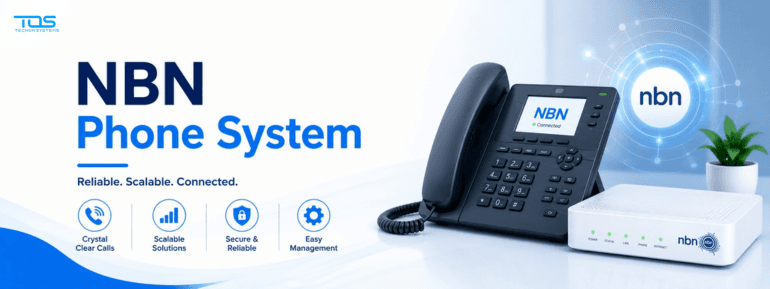
An NBN Phone System delivers business voice calls over the National Broadband Network instead of legacy copper lines. Calls travel as data, using VoIP technology, rather than dedicated analogue circuits.
This is not simply plugging an old handset into a new socket. It's a shift from fixed, single-purpose phone lines to a flexible, cloud-hosted communication platform.
Modern NBN Phone Systems bundle calling, messaging, video and call routing into one managed service. Extensions, call queues and voicemail-to-email all run through the same infrastructure your team already uses for internet access.
For growing and multi-site businesses, that consolidation is the real value. One platform replaces a patchwork of legacy PBX hardware, mobile plans and disconnected call features.
Why the PSTN Switch-Off Changes the Timeline for Every Business
This migration is not a future consideration. It's already underway, and the deadline is not set by your IT roadmap.
Telstra and other carriers are progressively decommissioning copper PSTN and ISDN services across Australia. Once a region is disconnected, legacy phone lines simply stop working.
I have seen businesses discover this the hard way, when a support call reveals their exchange has already been scheduled for shutdown. At that point, options narrow and costs rise.
Organisations that migrate on their own timeline get to choose their platform, test it properly and train staff without pressure. Organisations that wait get an emergency cutover.
The Risks of Delaying Your Migration
Every month of delay adds risk, not stability. Legacy copper infrastructure is being actively wound down, not maintained.
- Sudden loss of inbound and outbound calling when an exchange is decommissioned
- Alarm systems, EFTPOS terminals and fax lines that still depend on copper failing without warning
- Rushed, poorly planned cutovers that cause extended downtime
- Missed opportunity to consolidate calling, messaging and video into one platform
- Continued exposure to rising legacy line rental costs while carriers wind down support
None of these risks are hypothetical. They are the direct, predictable result of treating phone infrastructure as someone else's problem until it fails.
What to Look for in a Business-Grade NBN Phone System
Not every VoIP offering is built for enterprise reliability. The features that matter go well beyond making and receiving calls.
- Intelligent call routing and queuing for high call volumes
- Voicemail-to-email and call transcription for faster follow-up
- Integration with Microsoft Teams and existing CRM platforms
- Mobile and softphone apps for staff working outside the office
- Detailed call analytics for service and sales performance
- Multi-site support with centralised administration
A system that lacks these capabilities is more than an inconvenience. It can create operational gaps, limit productivity, and reduce the quality of customer interactions. Meanwhile, competitors using modern, well-configured communication platforms can operate more efficiently and respond faster to customer needs.
Take the next step towards a more reliable phone system.
Reliability and Business Continuity on the NBN
The most common objection to NBN-based calling is reliability. It's a fair concern, and it's solvable with the right design, not a reason to delay.
A well-architected NBN Phone System uses redundant internet connections and automatic failover routing. If the primary connection drops, calls redirect to mobile networks or a secondary path without staff noticing.
Power outages need the same planning. Battery backup for onsite equipment, combined with cloud-hosted call handling, keeps calls reaching your business even when the office itself loses power.
Business continuity planning for voice deserves the same rigour as your data backup strategy. A missed customer call during an outage carries a real commercial cost.
Security Considerations for Cloud-Based Voice
Moving voice onto the network introduces new security responsibilities that legacy copper lines never carried.
VoIP traffic needs the same protection as any other business-critical data. Encrypted call traffic, secure authentication and network segmentation all belong in a properly configured deployment.
|
For additional insights into hosted voice solutions, explore our article on Cloud-Based Business Telephone Systems
|
Toll fraud is a real and underappreciated risk. Poorly secured VoIP systems are a known target for automated attacks that generate fraudulent international call charges overnight.
The Cost Case for Moving Now
Legacy line rental, per-service maintenance fees and hardware ageing out of support all add up quietly, year after year.
An NBN Phone System typically consolidates these costs into a single, predictable subscription. Businesses commonly reduce recurring telecom spend by moving off multiple legacy services onto one managed platform.
Scaling costs change too. Adding a new starter means adding a licence, not booking a technician to run new copper cabling.
For businesses opening new sites or supporting hybrid teams, that flexibility compounds. Growth no longer waits on physical infrastructure.
Choosing the Right NBN Phone System Partner
The platform matters less than the partner configuring it. Most poor experiences with cloud calling trace back to a rushed, unplanned migration rather than the technology itself.
A properly scoped NBN Phone System deployment starts with a review of your current call flows, site locations and integration needs, not a generic hardware swap.
That planning phase determines whether staff experience a seamless transition or a disruptive one. It's worth getting right the first time.
Why Australian Businesses Choose TECHOM Systems
TECHOM Systems designs and manages NBN Phone System deployments for organisations across finance, healthcare, education and professional services.
Our consultants scope every migration around your actual call flows and business hours, not a one-size-fits-all template.
Each engagement includes-
- A full review of current phone lines, call volumes and dependent systems
- A migration plan sequenced to avoid service disruption
- Redundant connectivity and failover design for business continuity
- Post-migration support and staff training
We manage the entire transition, from initial audit through to go-live support, so your team experiences the upgrade, not the disruption.
Frequently Asked Questions
#1. What is an NBN Phone System?
It's a business phone service delivered over the National Broadband Network using VoIP technology, replacing traditional copper PSTN and ISDN lines.
#2. Do I have to move to an NBN Phone System?
Yes, eventually. Carriers are progressively switching off copper PSTN and ISDN services across Australia, so every business will need to migrate.
#3. Will call quality suffer over the NBN?
Not with a properly configured deployment. Business-grade connections, quality-of-service settings and redundant routing keep call quality consistent.
#4. What happens to my phone number when I migrate?
Existing business numbers can typically be ported across to the new system, so customers keep dialling the number they already know.
#5. Can an NBN Phone System handle multiple office locations?
Yes. Cloud-hosted platforms support multi-site deployments from a single, centrally managed system.
#6. What happens if my internet connection drops?
A properly designed deployment includes failover routing to mobile networks or a secondary connection, keeping calls connected during an outage.
#7. How long does a typical migration take?
Most business migrations complete within two to six weeks, depending on site count, call complexity and integration requirements.
Conclusion - Voice Infrastructure Deserves the Same Planning as Everything Else
An NBN Phone System is no longer a future decision. It's the infrastructure Australian businesses are already being moved onto, ready or not.
Organisations that plan the migration on their own terms protect call continuity, cut recurring costs and gain communication features legacy lines never offered.
TECHOM Systems has guided Australian businesses through this transition with structured, low-disruption migrations built around how they actually operate.
If your business is still running on ageing copper lines, the switch-off timeline is closer than it looks. Talk to our team before the decision gets made for you.
Take control of your migration timeline and speak with our NBN phone specialists today.